
Product Thinking
Relationship memory is not contact management
Most people do not need a personal CRM. They need a private place to keep the details that make the next conversation warmer and more useful.

Relationship memory is the layer between contact management and real human context: what someone told you, what you promised, and what matters before the next conversation.
Start here Relationship memory is not contact management Why people pick Intriq
Type a line or record a voice note after you talk to someone. Intriq files the details on the right person for you to confirm.
Ask for a brief before a call and see what they are working on, what was said last time, and the follow-ups you promised.
Everything comes from notes you chose to save. Intriq never scrapes public profiles.
Recommended
Product Thinking
Most people do not need a personal CRM. They need a private place to keep the details that make the next conversation warmer and more useful.

Product Thinking
Forgetting details about people is not a character flaw. Why it happens, how modern life fragments context, and how a memory system helps.

Workflow
Remembering what you talked about starts with capturing the right details right after a conversation. A practical system for context, promises.
In depth
Relationship memory is the practice of preserving the soft, useful context about people you know: how you met, what they care about, what was last said, what you promised, who introduced you, and the small details that make the next conversation feel remembered. It is the layer your contacts app and your sales CRM were never designed to hold.
Plain notes apps store information by document, not by person. After a few months the same name appears across a dozen entries, the timeline is impossible to reconstruct, and the details you would be disappointed to forget are buried inside meeting recaps. Relationship memory works the other way around: every detail lives on the person, and the person carries their own searchable timeline.
It should make capture take seconds in the moment after a conversation, organize the details around people automatically, hold reminders that carry context (not just names), surface a short briefing before the next interaction, and stay private by default because the content is personal. If any one of those breaks down, the habit collapses within a month.
Intriq is built specifically for relationship memory, on iPhone and the web. You write what happened in plain English, review the details that get attached to each person, and ask for a grounded briefing before your next coffee, call, or family visit. It is intentionally not a personal CRM in the pipeline sense: there are no deal stages, no LinkedIn auto-sync, and no team workspace.
Common questions
Relationship memory is the soft context about people you know, such as how you met, what was said, what you promised, and what they care about, captured so you can recall it before the next conversation. It sits between a contacts app (which stores reachability) and a CRM (which stores pipeline).
They overlap. Personal CRM is a category label that usually implies reminders, networks, and integrations. Relationship memory describes the job to be done: preserving context so future interactions are warmer and more useful. A relationship memory app is a personal CRM optimized for recall rather than pipeline.
Save the details you would be disappointed to forget: family context, current work focus, preferences, promises you made, follow-up timing, important dates, and impressions you want to revisit. Skip details that are intrusive, irrelevant, or likely to become stale.
Library

Comparison
Plaud charges for the minutes you record. Pocket charges for how long you keep summaries. Note Pro, NotePin S and Pocket compared on cost, calls, voices.

Buying Guide
AI voice recorders cost $120 to $189 and differ in microphones, call capture and minutes. Plaud, Soundcore Work, MindClip and Pocket, compared.

Buying Guide
Typeless is an AI voice keyboard for Mac, Windows, iPhone and Android. What it costs, what it keeps about you, and how it compares with Wispr Flow.
Buying Guide
Apple's built-in dictation is free and better than people think. Here is when it is enough, and which paid app is worth it when it is not.
Buying Guide
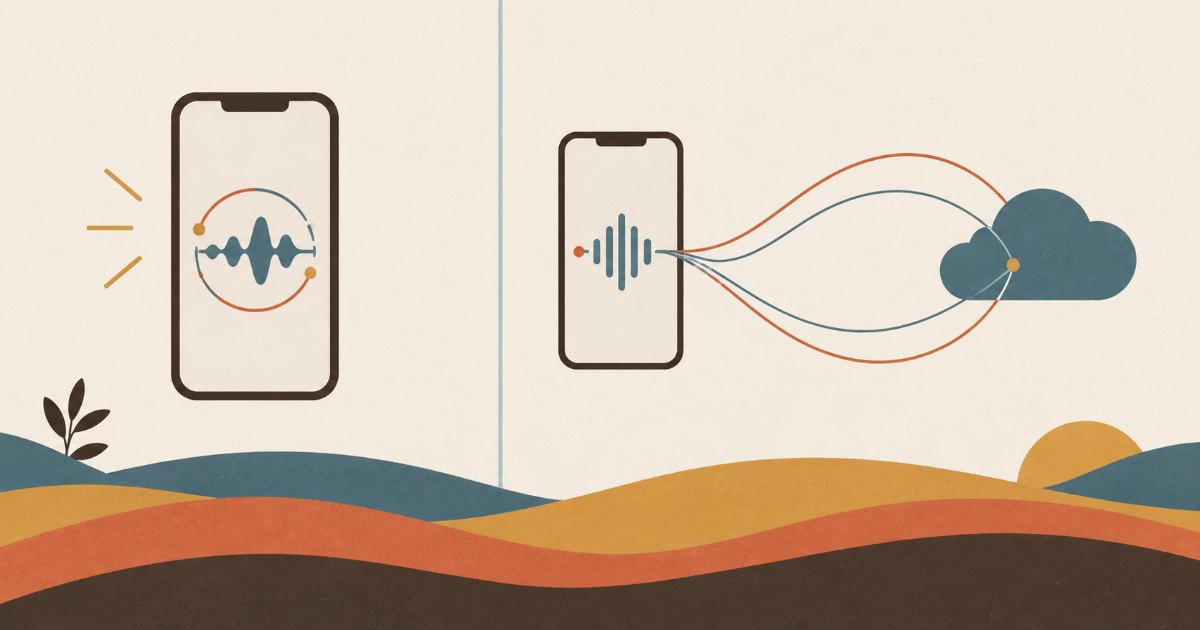
Wispr Flow is a voice keyboard that types what you say in any app. What it costs, how the free tier is capped, and the problem it leaves behind.
Comparison
Both turn speech into text anywhere on your Mac or iPhone. The real difference is where your voice gets processed, and that decides the rest.
Comparison
Does Granola work on Apple Watch? Check watchOS requirements, installation, offline recording and sync, plus how it compares with Intriq.

Buying Guide
Best AI wearables in 2026, from $49.99 to $189: Bee, Plaud, Omi and Friend. The price shows which of three different products you are buying.

Product Thinking
Personal knowledge management is a set of filing rules for things you read. Here is what each method optimizes, and the one thing they all miss.

Comparison
The Note Pro is a card you pull out. The NotePin S is a pin you wear. The spec sheets are close, so pick by when you decide to record.

Buying Guide
AI meeting assistants produce four different outputs: a transcript, notes, a summary, or minutes. Which one you need decides which tool to buy.

AI for Relationships
All four assistants keep memory now. All of it is a profile of you, and none of it is filed under the people in your life.

AI for Relationships
How to clear ChatGPT memory: delete one memory or all of it, make it actually gone, fix a full memory, and what to copy out before you wipe it.
AI for Relationships
Claude has memory on free, Pro and Max. How to enable it, what it stores, how project memory differs, and how to import from ChatGPT.

Privacy
You consented to your assistant's memory. The people you mention in it did not. What happens to a third party's details once they land there.

Comparison
Meta bought Limitless and Pendant sales stopped. Here are the alternatives, sorted by which of the three things you actually wanted from it.

Buying Guide
Lifetime deals, bundled minutes and on-device models all promise no monthly fee. Here is what each really charges you, and the better question.

Privacy
Federal law needs one party's consent. Twelve states need everyone's. Here is the list, plus the three questions that decide more than the list does.

Buying Guide
Three ways to get an AI transcript without a bot in the participant list, and the disclosure question that none of them actually removes.

Buying Guide
Most AI note takers need a calendar invite and a meeting link. Here is what actually works in a room, and what to do with the transcript afterwards.

Privacy
Personal CRMs often pull your network via a LinkedIn extension. What those extensions read, what the platform rules say, and how to judge the risk.

Personal CRM
iMessage already holds years of conversations with the people you know. Here is how far it goes as a relationship system, and exactly where it stops.

Product Thinking
Legal and polite are different questions. A practical guide to when an AI notetaker is fine, when it is not, and what people actually notice.

Privacy
A plain walkthrough of the data path behind AI notetakers: who holds the audio, who can retrieve it, and which questions to ask before you switch one on.
Intriq